




Do Diapers Expire? How Storage Affects Their Performance
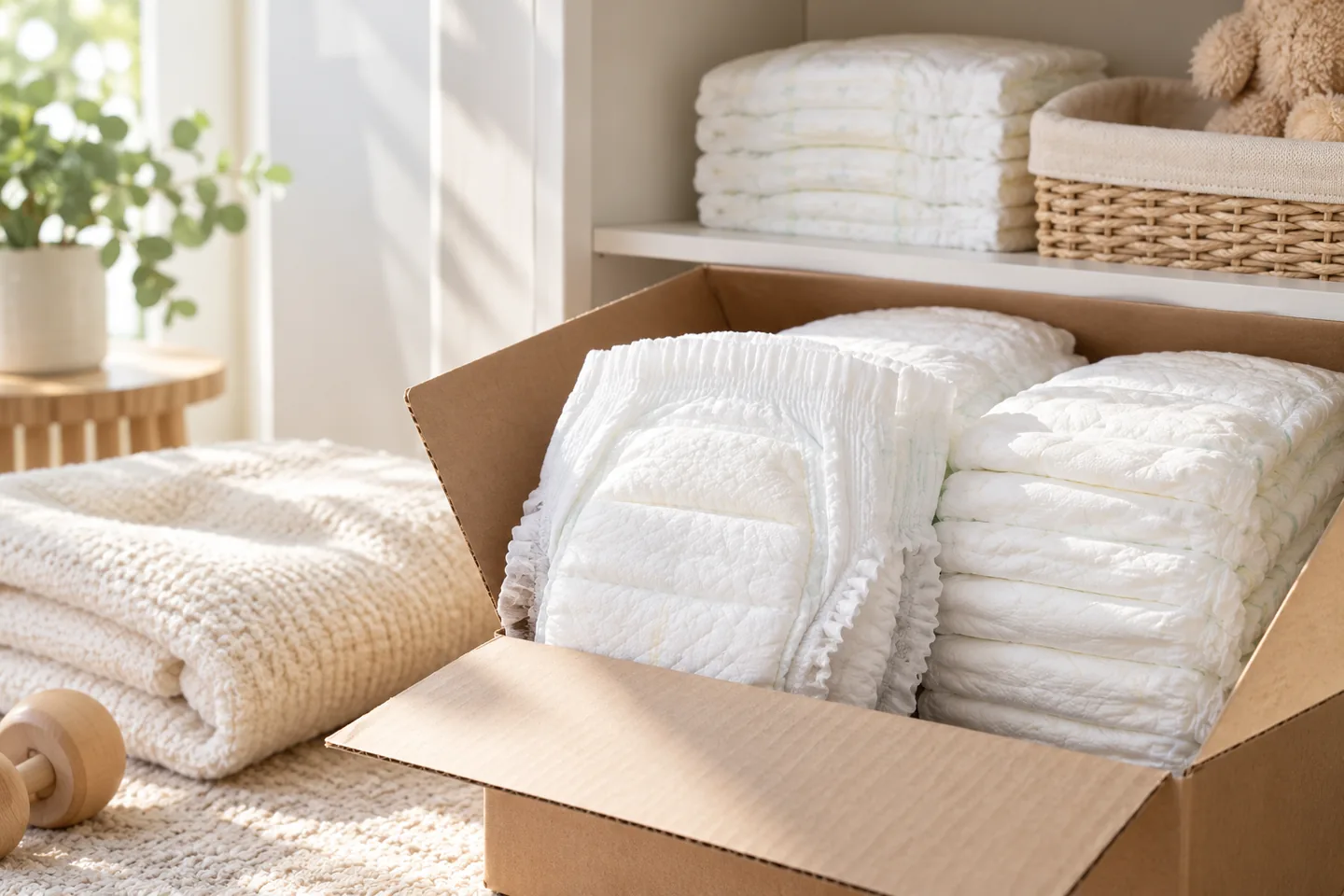
Most disposable baby diapers do not have a universal expiration date, but they are not immune to aging. An unopened pack kept in a cool, dry cupboard may stay in good condition far longer than one stored in a hot garage or damp basement. Over time, the elastic, fastening tapes and absorbent materials can change, even if the diapers have never been worn.
If you have found a pack left over from an older child, the most useful questions are not simply how old is it? but where was it stored, is the packaging intact, and does the diaper still look and function as intended?
Do Diapers Have an Expiration Date?
Not every disposable diaper carries an expiration or best-before date. Some packaging shows a manufacturing date, a lot code or an advised shelf-life period instead. The meaning of those markings is specific to the manufacturer and market, so a production code should not automatically be treated as an expiration date.
There is also no single shelf-life number that applies to every brand, size and construction. A diaper's useful life depends on its materials, packaging and storage conditions. Manufacturers may publish their own recommended periods for unopened and opened packs, and those recommendations should take priority over general advice online.
If the pack provides a clear use-by date, follow it. If you cannot identify the manufacturing date or storage history, ask the supplier before relying on the product-particularly when you are considering diapers that have been stored for several years.
What Changes When Disposable Diapers Get Older?
A disposable diaper is a combination of different materials, each with a job to do. The skin-contact nonwoven layer lets liquid move into the core; superabsorbent polymer (SAP) and other absorbent materials retain moisture; the outer layer helps prevent leaks; and elastic and fastening components maintain the fit. Their condition can be affected differently by time, heat, humidity and handling.
If you want to understand how these layers work together, see LECHEN's overview of baby diaper materials and construction.

Elastic waistbands and leg cuffs
Elastic components may gradually lose their ability to stretch and recover, especially after exposure to heat. A waistband that stays loose or leg cuffs that no longer sit close to the skin can increase leakage even when the absorbent core is still functional.
Fastening tapes and adhesives
Taped diapers depend on fastening components that remain secure during movement. If a tab peels away unusually easily, breaks or fails to hold after refastening, the diaper may no longer provide a dependable fit.
Absorbent core and outer layers
Moisture intrusion, physical damage or prolonged compression can affect the condition of absorbent materials. Look for hard lumps, an uneven core, torn surfaces or other noticeable changes. A diaper that has visibly absorbed environmental moisture should not be treated as unused, clean stock.
A slightly different color alone does not prove contamination. However, pronounced discoloration together with an unusual smell, staining, dampness or damaged packaging is a reason to discard the product.
Can You Use Diapers That Are Five or Six Years Old?
A pack that has been stored for five or six years is not automatically contaminated just because it is old. But its condition is harder to verify, particularly if it has been moved between homes, kept in a garage or stored without its original packaging.
For a baby, the practical choice is to use newer stock if you cannot confirm the storage history or the manufacturer's guidance. This is especially sensible if the packaging is torn, there is any sign of moisture, the elastic feels weak or the tabs do not fasten securely.
If an older pack is still sealed and looks normal, contact the manufacturer with the batch or production code instead of assuming it is safe or unsafe based on age alone. An appearance check cannot confirm every aspect of performance, and a home water-pouring test cannot establish hygienic condition.
How Should You Store Unopened Diapers?
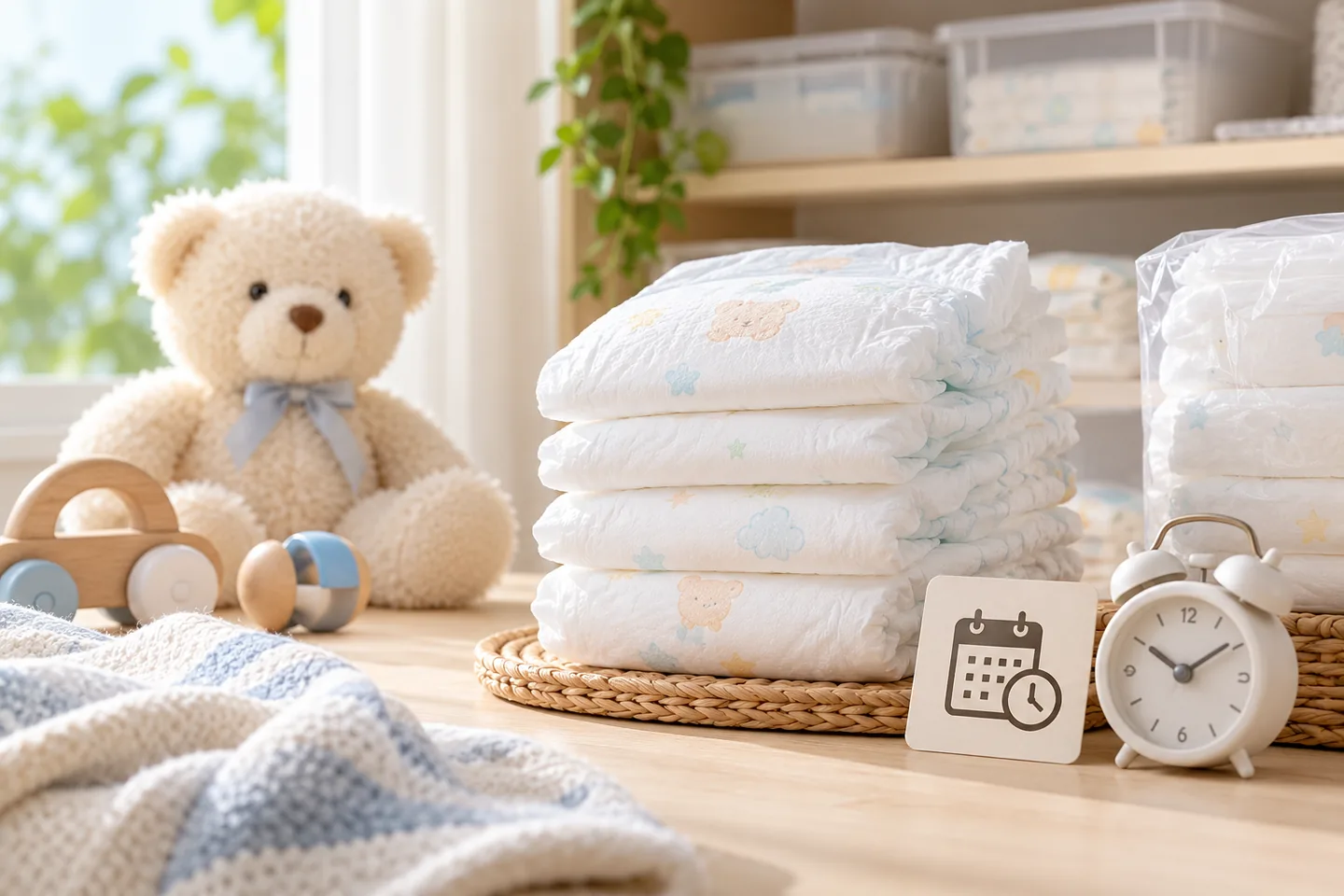
The best storage location is clean, dry, shaded and reasonably temperature-stable. Keep packages away from leaks, condensation, heaters and prolonged direct sunlight. A bedroom cupboard or dry storage cabinet is often better than an attic, bathroom or garage.
- Keep original packaging intact. It provides a protective barrier against dust, handling and everyday changes in the surrounding air.
- Choose a dry location. If you notice condensation, water stains or dampness around the storage area, move the stock away from that source.
- Avoid excess heat and direct sun. A stable indoor environment is preferable to a hot car, sunlit window or attic.
- Do not crush the packs. Avoid placing heavy objects on top of diaper stacks, especially for long periods.
- Use older suitable stock first. Organizing unopened packs by purchase or manufacturing date helps reduce unnecessary long-term storage.
The US Environmental Protection Agency's guidance on moisture control explains why preventing persistent dampness is important in household storage areas. This is general home-moisture guidance, not a claim that an old diaper automatically grows mold.
Do Diapers Go Bad After the Pack Is Opened?
Opening a pack removes some of the protection provided by the original packaging. Loose diapers are more exposed to dust, accidental splashes, odors and fluctuations in room humidity. That does not mean they suddenly become unusable after a fixed number of days.
Keep unused diapers in their clean original bag when practical, with the opening folded or closed, or in a clean, dry storage container. Avoid storing them in a humid bathroom, placing them directly on the floor or mixing them with cleaning products.
If you are saving opened diapers for a future child, label the date you opened the pack and check them again before use. Follow the product's own storage recommendations rather than adopting a universal "30-day" or "three-month" rule found online.
How Can You Tell if Old Diapers Have Gone Bad?
Before using an older pack, look at both the outside packaging and the diaper itself. This quick inspection is particularly useful if the date is uncertain, but it does not replace the manufacturer's quality assessment.

| What to check | What you might notice | What to do |
|---|---|---|
| Packaging | Tears, dampness, water marks or broken seals | Do not use stock that may have been exposed to moisture or contamination. |
| Smell and appearance | Musty odor, staining, visible growth or unusual residue | Discard the affected product; do not try to deodorize or dry it for reuse. |
| Fastening and elastic | Tabs fail to hold; waistband or cuffs remain stretched out | Choose newer diapers that fasten and fit properly. |
| Absorbent area | Hard clumps, damaged core, tears or an obviously uneven structure | Avoid using a diaper with compromised construction. |
| Product information | Unknown date, missing packaging or unclear storage history | Ask the manufacturer or supplier, especially for very old stock. |
Do not leave a damaged diaper on a baby to "see whether it still works." A poor fit or reduced absorption can mean longer contact with moisture. The American Academy of Pediatrics' diaper-rash guidance recommends frequent diaper changes and gentle cleaning to limit urine and stool contact with the skin.
What Should Diaper Brands and Wholesale Buyers Check?
For private-label brands, retailers and distributors, storage is also an inventory-quality issue. Two cartons made to the same specification can reach customers in very different condition if one remains in a dry warehouse and the other spends months in a hot, damp area.
Before accepting older or long-stored stock, buyers should confirm the production lot, packaging condition, storage history and any shelf-life statement supplied by the manufacturer. Where needed, request representative sample checks for tape holding, elastic recovery, absorbent-core condition and leakage performance. A single visual inspection is not a substitute for an agreed quality-control procedure.
LECHEN's baby diaper range includes options for different sizes and absorbent structures. For example, its thin-core taped baby diaper uses SAP-based absorption, nonwoven materials and adjustable fastening. Buyers planning bulk orders can request current specifications, packaging details and applicable storage recommendations through the LECHEN contact page.
Frequently Asked Questions
Many disposable diapers do not have a universal printed expiration date. An unopened pack can be better protected from dust and moisture, but age, packaging integrity and storage conditions still matter. Follow any dates or storage instructions provided by the manufacturer.
How long do disposable diapers last in storage?There is no single time period for all products. Different manufacturers may give different recommended storage or use periods. A cool, dry environment helps preserve quality, but the maker's guidance and the condition of the product should determine whether old stock remains suitable.
Do diapers go bad if the package has been opened?They can become dirty, damp or damaged after opening because the original packaging no longer provides the same protection. Store remaining diapers in a clean, dry place and inspect them before use. There is no universal opened-pack expiry period.
Can I use diapers that are five years old?Age alone does not prove that a diaper is contaminated, but five-year-old stock is more difficult to assess. If storage history is uncertain, the packaging is damaged or the diaper's fit and materials have changed, choose newer diapers. Ask the manufacturer when in doubt.
Why do old diapers sometimes turn yellow?Some color change can occur as materials age or are exposed to light and air. A color shift by itself does not establish microbial contamination. If it appears together with a musty smell, dampness, residue or structural damage, discard the diapers.
Should I put damp diapers in the sun to dry or disinfect them?No. A diaper that has been wet during storage should not be restored for baby use by sun-drying. Drying does not verify hygienic condition or restore damaged adhesive, elastic or absorbent materials. Replace it with clean stock.
Is diaper shelf life the same as the time it takes a diaper to decompose?No. Shelf life describes how long an unused diaper is expected to remain suitable for its intended function during storage. Decomposition concerns what happens to materials after disposal. They are separate questions.
The Bottom Line
So, do diapers expire? Most disposable diapers do not come with one universal expiration date, but that does not make storage irrelevant. Heat, humidity, damaged packaging and changes in the diaper's elastic or absorbent structure can affect how reliably it performs.
Keep unused diapers clean, dry and protected; check older packs carefully; and follow the manufacturer's product-specific advice. If a diaper's condition is uncertain, a fresh pack is usually the more practical choice.