






Overnight Diapers vs Regular Diapers: What Really Changes?
Overnight diapers and regular diapers absorb urine in much the same way, but some overnight styles are built to handle longer periods between changes. They may use a different absorbent-core configuration, liquid-distribution design, or fit features to help manage wetness during sleep. That does not mean every overnight diaper is thicker, holds a fixed amount more, or works better for every child.
If your baby wakes with dry pajamas and a comfortable diaper, a regular daytime diaper may already be enough. If leaks repeatedly happen after longer stretches of sleep, the next step is to work out whether the problem is absorbency, fit, or both.
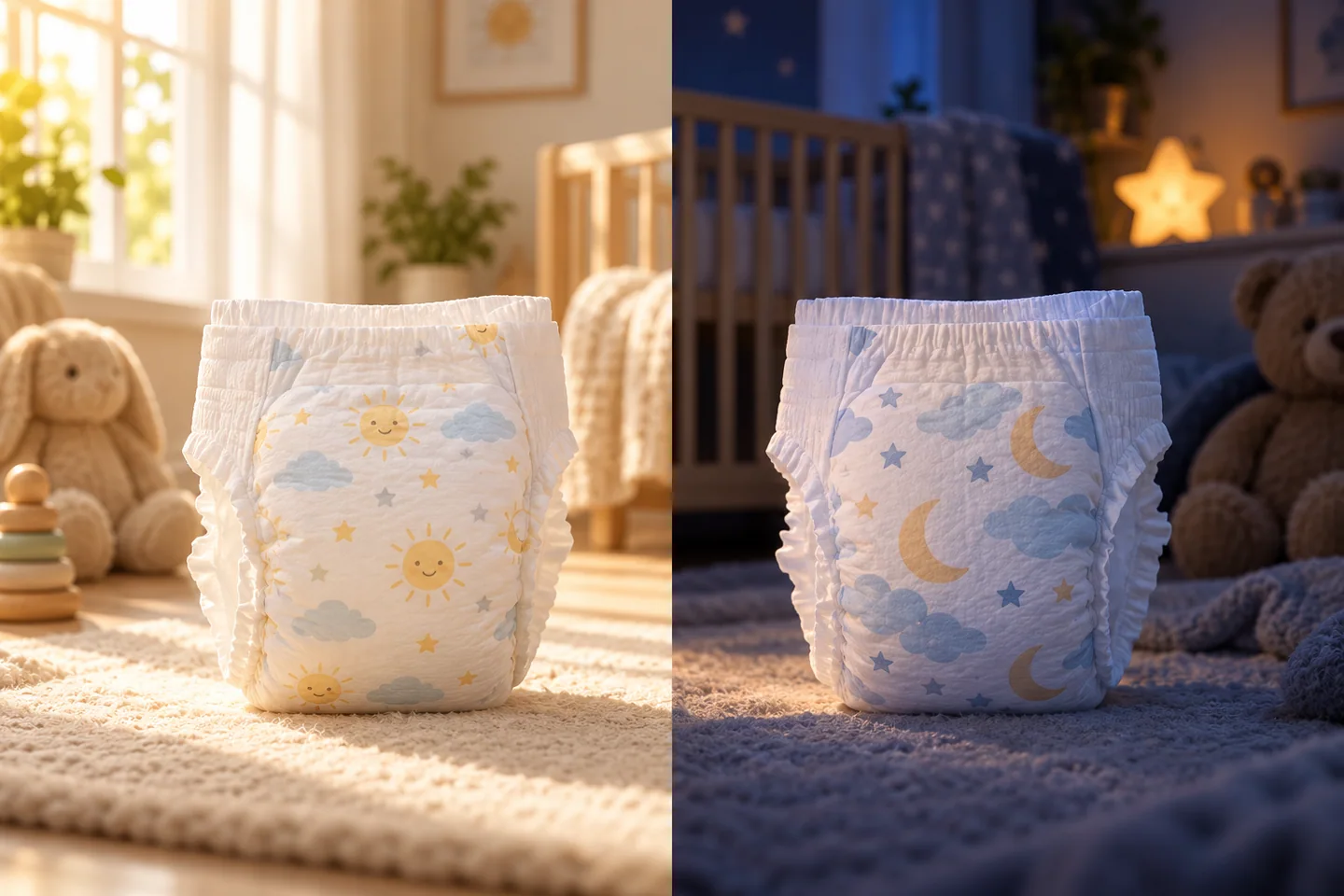
Overnight Diapers vs Regular Diapers: What Actually Changes?
The labels describe intended use, not a universal manufacturing standard. Daytime diapers are made for everyday wear and relatively frequent changes. Overnight versions generally emphasize liquid handling and leak protection for longer sleep periods. The details depend on the brand, size and product specification.
| What to compare | Regular diapers | Overnight diapers |
|---|---|---|
| Typical purpose | Everyday changes during the day or night | Longer stretches of sleep |
| Absorbent core | Designed for the product's normal use | May offer higher capacity or a different distribution layout |
| Thickness | Varies widely | May be thicker, but not necessarily |
| Waist and leg fit | Depends on size and elastic design | Just as important; a poor seal can still leak |
| Style | Taped diapers or pull-on pants | May also be taped or pull-on |
| Best reason to choose | Your current product fits and performs well | Nighttime saturation or leaks persist despite a good fit |
A moon printed on the front or an "all-night" label is not proof of superior performance by itself. Compare the product's stated use, available test information and the way it fits your child.
How Does the Absorbent Core Make a Difference?
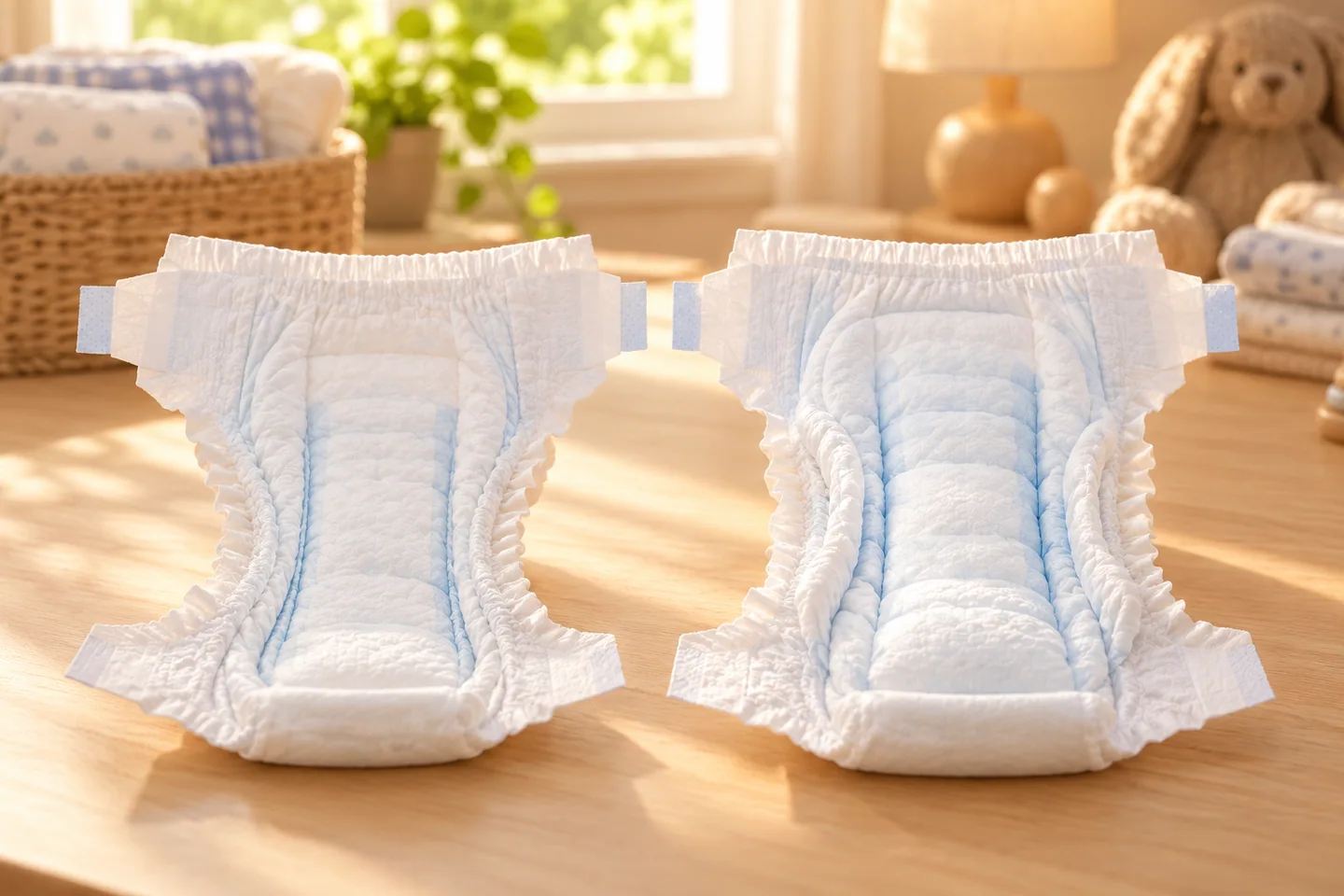
Disposable diapers typically rely on a combination of soft surface layers, liquid-distribution materials and an absorbent core containing superabsorbent polymer (SAP). SAP holds liquid inside the core; surrounding layers help move wetness away from the skin-contact surface.
For nighttime use, three aspects are particularly useful to understand:
- Capacity: how much liquid the core can retain under the relevant test conditions.
- Acquisition and distribution: how quickly fluid enters the core and spreads instead of pooling in one area.
- Rewet: how much moisture returns toward the surface under pressure after absorption.
More bulk does not automatically mean better results. A well-designed thinner core may distribute and retain liquid effectively, while a poorly fitting high-capacity diaper may still leak around the leg openings or waist.
Why Do Diapers Leak More Often at Night?
A nighttime leak is not always a sign that your child needs a larger or more absorbent diaper. Where the wetness appears gives a better clue.
If the whole core feels saturated
The diaper may be reaching its capacity before morning. Try a diaper specifically intended for longer wear, while still checking the manufacturer's size chart and the actual fit. If your baby needs a change during the night, change the diaper rather than expecting a higher-absorbency product to replace appropriate care.
If the pajamas are wet around the thighs
Check the leg cuffs. They should sit gently against the skin without being folded inward, digging in or leaving obvious gaps. A larger size can sometimes create more space around the legs and make the leak worse.
If the wetness is near the front or back waistband
Look at the position of the absorbent area, how the waistband sits, and whether the diaper moves during sleep. For babies who roll or change positions, the contact points may be different from those during the day. Avoid pulling the waistband excessively tight in an attempt to stop leaks.

Are Overnight Diapers Worth It for Every Baby?
Not always. If regular diapers fit comfortably, hold your child's usual nighttime wetting and leave clothing dry, there is no need to switch just because an overnight version exists.
A separate nighttime product may be worth trying if the diaper is consistently very full by morning, wet clothing interrupts sleep, or leaks continue even after the cuffs and waist have been adjusted correctly.
For some families, a different size or fit solves the problem; for others, a dedicated overnight design works better. Neither solution is guaranteed. A short trial is often more informative than buying a large quantity immediately.
Should You Size Up for Overnight Diapers?
Not automatically. A larger diaper may provide more coverage, but its extra space can also weaken the seal around the thighs. Start with the brand's size guide and how the current diaper fits, rather than choosing a larger number solely because it's nighttime.
Look for a waistband that rests comfortably, leg cuffs that sit in the right place, and an absorbent area that stays aligned when your child moves. Deep red pressure marks, fastening tabs at their limit or poor coverage can indicate that a different size or shape is needed.
If you're unsure, LECHEN's baby diaper fitting and changing guide covers the basics of fastening and checking the leg guards.
Can an Overnight Diaper Replace Changes During the Night?
No diaper should be treated as permission to leave stool against the skin. Change a soiled diaper promptly and check wet diapers according to your baby's needs, particularly if the skin is irritated, the diaper is leaking, or your baby seems uncomfortable.
The American Academy of Pediatrics' advice on diaper rash emphasizes frequent changes, gentle cleansing and reducing prolonged skin contact with urine and stool. The NHS also recommends changing wet or dirty nappies promptly and ensuring a proper fit.
For an older toddler who is dry during the day but still wets at night, the situation is different from infant diapering. Nighttime bladder control often develops after daytime toilet training. As the American Academy of Pediatrics explains, needing nighttime protection is not a failure of toilet training.
Which Diaper Should You Choose for Your Child?
Think about the problem you're trying to solve rather than shopping by label alone.
- Regular diaper works well: keep using it. Good fit and timely changes matter more than the words "day" or "night."
- The diaper is soaked by morning: consider a version designed for longer wear and compare absorbency information where available.
- Leaks happen around the legs or waist: correct the fit before assuming you need a higher-capacity core.
- Your toddler prefers pull-on pants: compare overnight pull-up designs, while checking whether they're intended for full nighttime wetting or lighter training accidents.

LECHEN offers different diaper formats, including overnight baby pull-up diapers, nighttime pull-up options and a wider baby diaper range. Product-specific capacity, size and performance should be confirmed from the current specification and sample testing rather than assumed from the category name.
What Should Private-Label Buyers Compare?
For brands planning both regular and overnight diaper ranges, the strongest difference is one that can be demonstrated, not just printed on the pack. Ask for comparable sample results covering liquid intake, retention under pressure, fit and leak performance. The test method, diaper size and liquid quantity should be stated so the numbers mean something.
Buyers should also decide whether the nighttime line will use a taped closure or pull-on waistband, how sizes will be graded, and which claims can be supported by actual product data. For sampling or private-label specifications, contact LECHEN with the intended age or weight range, product format and target market.
Frequently Asked Questions
They can be. Some have a different absorbent core or liquid-distribution design intended for longer wear. The actual difference varies by product; the name alone does not prove better performance.
Are overnight diapers worth the extra cost?They may be worth trying if regular diapers repeatedly saturate or leak during sleep. If your current diaper fits well and stays dry on the outside, a separate nighttime product may not offer much benefit.
Should I use one size bigger overnight?Only if the larger size fits properly. Sizing up may improve coverage for some children, but it can also create gaps at the legs or waist. Check the fit rather than automatically moving up a size.
Can you use overnight diapers during the day?Generally, yes, if the product is an appropriate size and suits your child's needs. There may be no practical reason to use a nighttime product during the day when a regular diaper works well.
Do overnight pull-ups hold as much as overnight taped diapers?There is no universal answer. Full-absorbency pull-up pants and taped nighttime diapers vary by model. Compare the manufacturer's specifications and choose the fit and absorption level that match your child.
Do I need to wake my baby for a nighttime diaper change?The answer depends on age, skin condition, whether the diaper is soiled or leaking, and your clinician's advice. Change stool promptly and respond to discomfort or irritation. Ask your pediatrician about nighttime routines for a newborn or a child with special care needs.
Why does my baby still leak in an overnight diaper?The absorbent core may be saturated, the leg guards may be tucked in, or the fit may be wrong for your child's shape or sleeping position. Check where the leak occurs before changing size or brand.
Does a thicker overnight diaper always absorb more?No. Thickness by itself is not a reliable measure of capacity or surface dryness. Core material, fluid distribution, retention under pressure and fit all contribute to performance.
A Better Night Starts with the Right Fit
Overnight diapers are an option, not a requirement. A well-fitting regular diaper may be all your child needs. When longer sleep stretches repeatedly lead to wet clothing or bedding, compare the actual absorbent design and check the fit before choosing another product. The right solution is the one that keeps your child comfortable while still allowing appropriate changes and skin care.